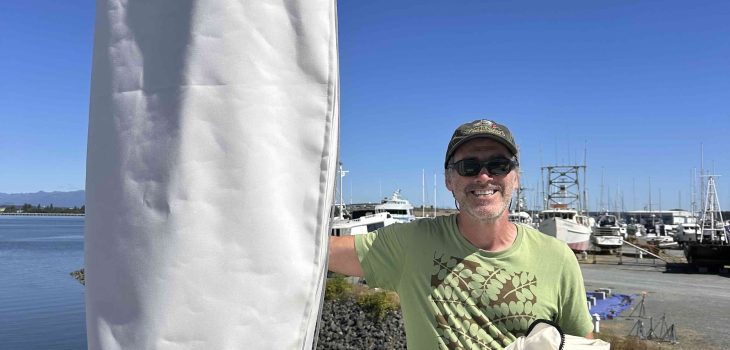
Marine Umbrella Cover Rebuild

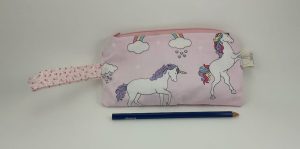
While I was visiting family on the east coast over the last few weeks, I started making zippered pouches with the ultimate goal of cornering the 4th grade unicorn pencil bag market on Etsy. It was a nice distraction to work on these when taking a break from a family reunion, working on my mom’s place, and kayaking in the Adirondacks. Plus, it helped me ‘sharpen’ my zipper skills.
I didn’t realize how much this ‘line of work’ (sorry, can’t resist) would help after wheels touched down in the PNW last week. I had been trading emails with Krystle, a crew-member of a large yacht getting ready to set sail in my home port of Anacortes, WA. On the back of the upper deck was a large umbrella (made by Tuuci) with a tattered cover. Did I want to take a stab at fabricating a new one? I was jet-lagged, unsure about my ability to re-create the same functionality, and did not have the right fabric or zippers.
But fundamentally it was just a big bag (albeit made out of fairly expensive UV resistant umbrella fabric and with a funny arc to the front portion, weather flaps on the zipper, a casing inside for a batten to help raise it, chafe protection on the top, etc!). I knew it was a good test of whether I wanted to do larger projects like this, especially making a pattern and working with Sunbrella fabric.
The next day, while waiting for the fabric to be delivered – I realized I had ordered the wrong zipper color (black) by not changing the default selection on the website. I had some smaller zippers but this cover would get a lot of salt air and wind on it – didn’t want it to be gnashing its teeth! Some frantic phone calls around town led me to ‘Classic Upholstery‘ and the owner/operator Julie told me to come on over. Her shop was 4 miles down the bike trail from me and it was a beautiful day – so off I pedaled. Nice way to work off the jet lag. Big thanks to Julie (and her dog Bear). Highly recommended for all your upholstery needs!
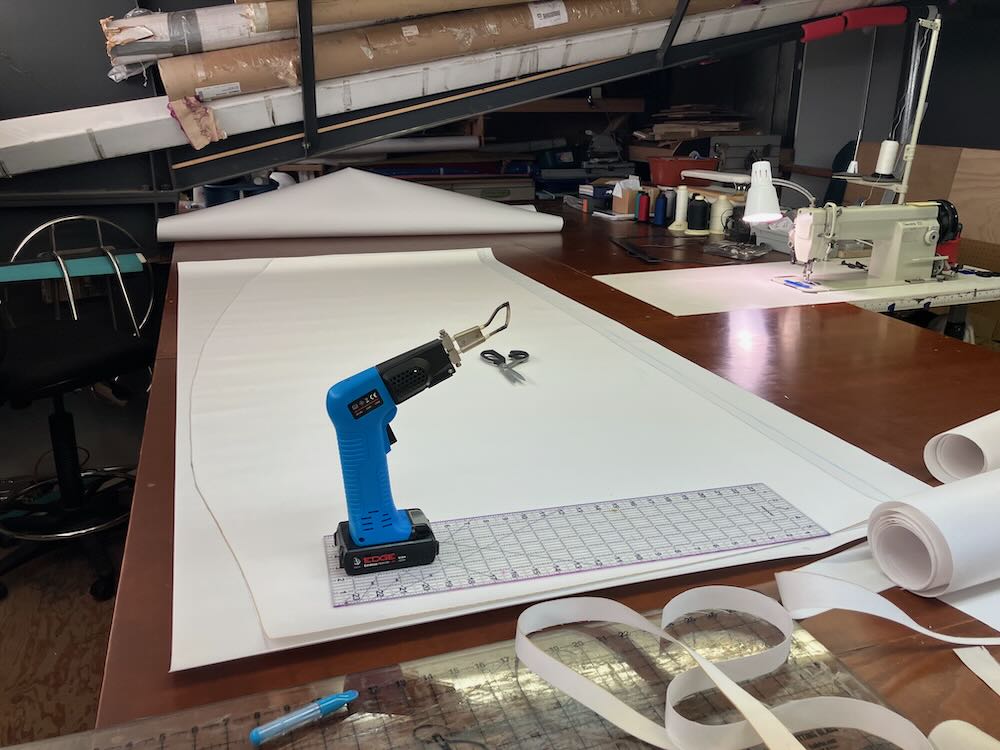
The easiest thing to do would have been to rip out all the seams on the old one and use it as a template, but I only had enough new fabric for one shot. If I messed things up – they would have no cover at all. So took a lot of measurements, made a template, and tried a prototype in cheaper muslin fabric While it seemed to work out during a trial fitting, I had doubts what I had prototyped would carry over; in all it felt like a half day wasted – a frustrating exercise because the muslin did not behave at all like the stiffer canvas that I would use in the final cover. So I unrolled the ‘real deal’, pulled out the hot knife and went to town.
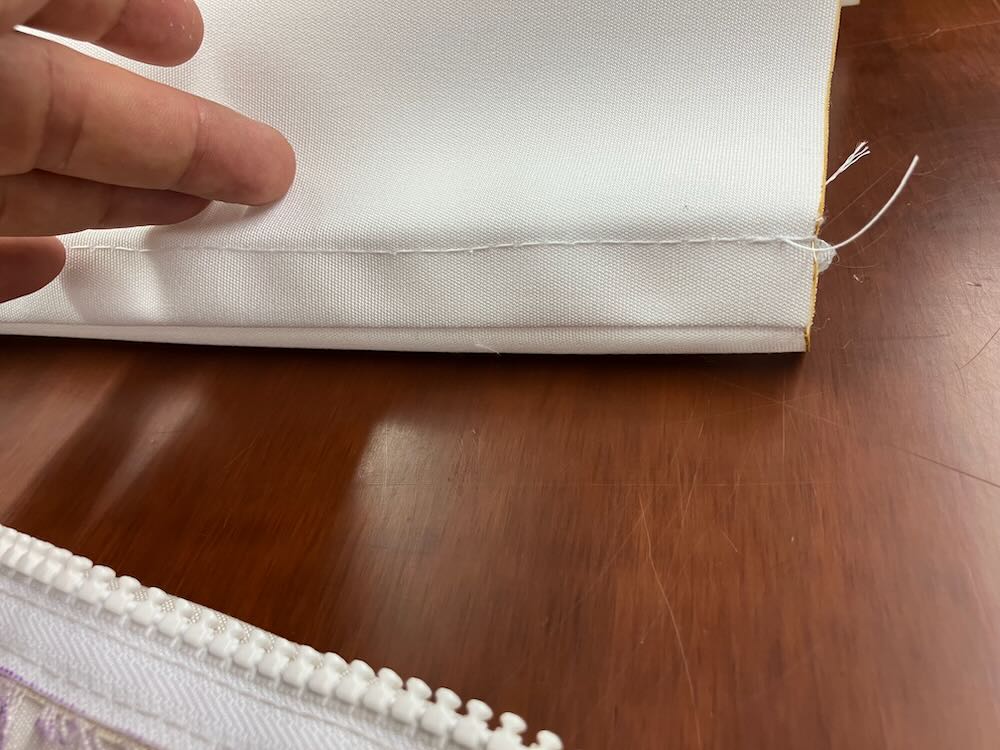
One of the hardest things was figuring out the seam in the back where two pieces of fabric were joined together. I wanted to use a true flat felled seam which is probably the best seam for this application. It actually has two lines of stitching, but one is hidden from the elements, serving as a backup and reducing rain penetration. But it is rarely used because it takes a lot of time and more fabric than other seams (the fabric is sort of accordion into each other). There are numerous simpler approaches (e.g. semi flat felled seam), but I wanted to get it right. I also found the logic of doing it a bit confusing as I thought one piece of fabric would need to be an extra inch wide so that both panels would be symmetrical in the end (it uses 1.5 inches of seam allowance and while the tutorial by Sailrite is great, it look like you need an extra inch). After a lot of testing with scrap fabric – I felt confident to make it happen on the real stuff.
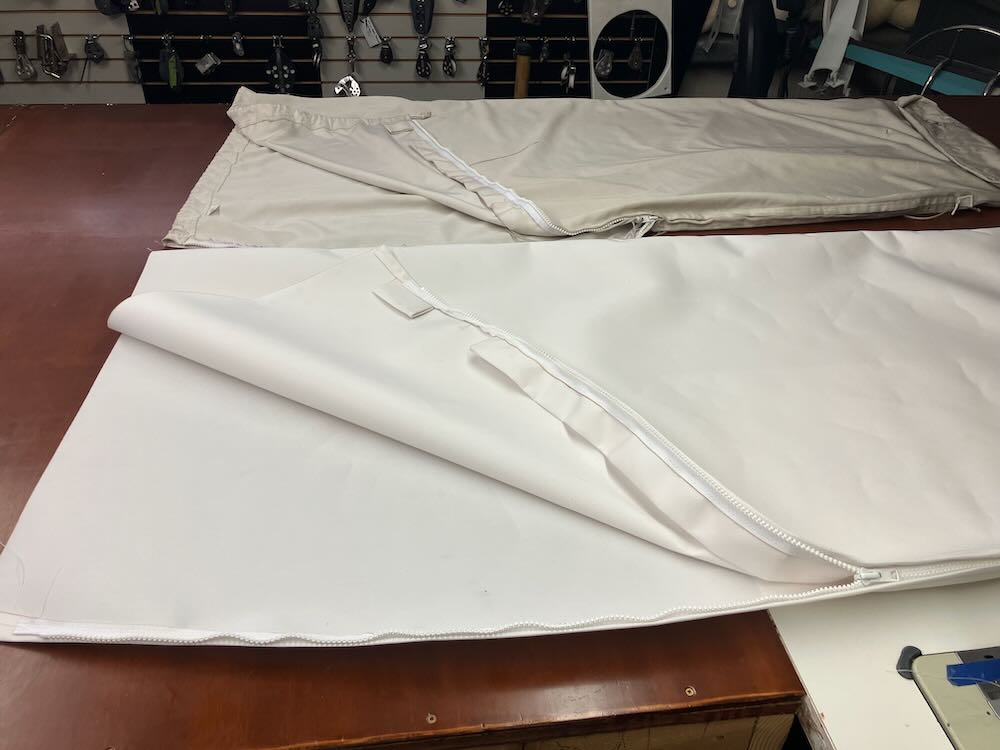
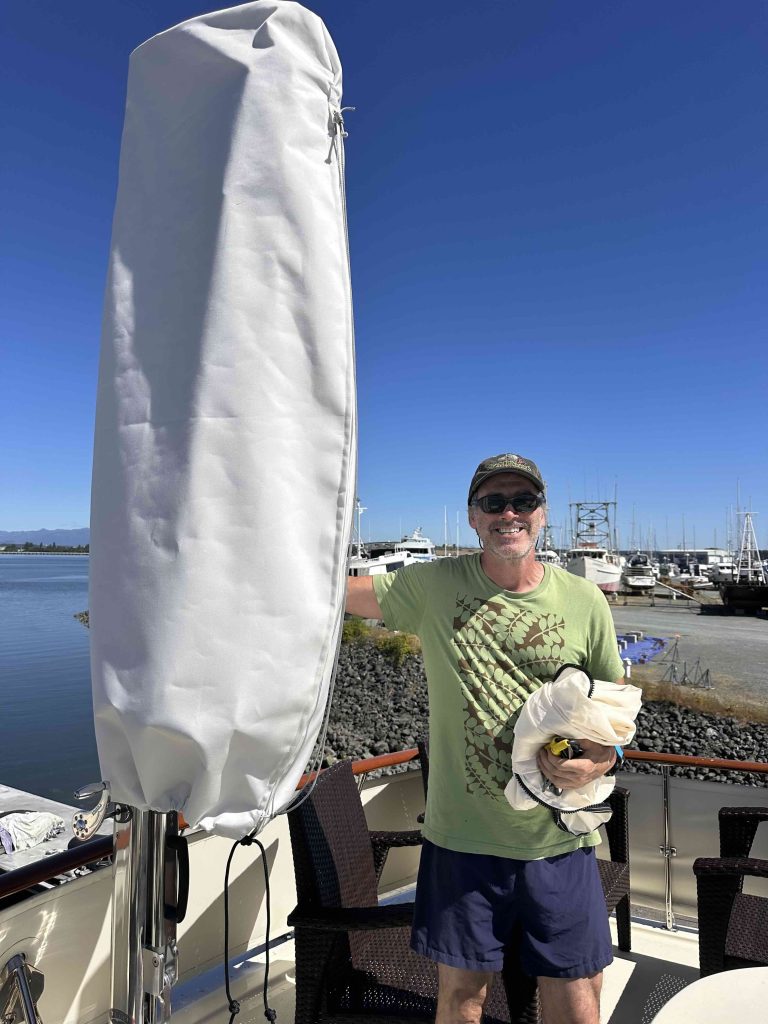
I ended up working through the weekend and just kept telling myself it was a learning project. And it was. And on Sunday afternoon it felt super satisfying to see it slide over the umbrella on the deck of the boat. And I was able to hand over the old cover intact to use as backup. May the former serve the yacht well and may the latter never be needed again. I wanted to ask Krystle and her fellow crew member partner Craig (and their doggie whose name escapes me) about their experiences as live-aboards in Mexico and Seattle and their roles as crew-members on the yacht – but they were getting ready to set sail the next day and I needed to go for a walk in the woods. Last I heard, they are anchored off Orcas Island. Gentle winds and following seas!
Are more projects like this in my future? Maybe! I just got a text message from someone who has a tent that connects to their 1959 VW Westfalia van. It has a few tears. Darn it!’
-Seth
Anacortes, WA 98221
2 COMMENTS
It’s me! The infamous Krystle!
Thanks again, Seth, for taking the leap and making the cover for us. It was lovely to work with you as we figured out if this would be a possibility. I really appreciated the transparency you provided when you weren’t sure if you could make the replacement bag as nice as you’d like given our short timeframe. It felt like you understaood the needs of the boat and kept it in mind when you were debating the project. (We’ve worked with lots of folks who have made big promises on timelines and left us empty handed in the end so this was refreshing!)
The owner loved the replacement and everyone is very pleased. Best of luck on future learning projects!
Thanks for your comment Krystle. It means a lot. I am so glad it all worked out and safe sailing up to Canada (and beyond!). Hope to cross paths again with you and Craig. Cheers, Seth
Comments are closed.